10 Hotpot Recipe Ideas That Will Transform Your Dinner Table
If you’ve been searching for the best hotpot recipe ideas to try at home, you’ve landed in exactly the right place. Hotpot — also known as hot pot, steamboat, or shabu-shabu depending on where you are in the world — is one of the most beloved communal dining experiences in Asian cuisine. It’s interactive, endlessly customizable, and incredibly fun to share with family and friends.
In this guide, we’re covering 10 incredible hotpot recipes from across Asia — from the fiery, numbing heat of a classic Sichuan spicy hotpot to the delicate, butter-rich comfort of Japanese sukiyaki. Whether you’re a complete beginner or a seasoned hotpot lover looking for new ideas, these recipes will give you everything you need to host the ultimate hotpot dinner party at home.
Each recipe includes a detailed hotpot broth recipe, the best hotpot ingredients to use, dipping sauces, and pro tips to make sure everything turns out perfectly. Let’s dive in.
What Is Hotpot and Why Is Everyone Obsessed With It?
Hotpot is a cooking method where a simmering pot of seasoned broth is placed at the center of the dining table, and diners cook their own ingredients — thinly sliced meats, fresh vegetables, tofu, noodles, dumplings, and more — directly in the bubbling broth. It originated in China over a thousand years ago and has since spread across Asia, evolving into dozens of regional variations.
The reason hotpot has become so popular worldwide is simple: it’s one of the most social, interactive, and deeply satisfying meals you can have. There’s no pressure on the cook to time everything perfectly. Everyone gathers around the table, picks what they want to eat, and cooks it themselves. It’s a meal that naturally brings people together and keeps them at the table for hours.
Beyond the social experience, hotpot is also incredibly healthy and nutritious. Because the ingredients are cooked in broth rather than oil, they retain more of their natural nutrients. You can easily load up on vegetables, lean proteins, and fiber-rich ingredients, making hotpot one of the best healthy dinner ideas for families.
Essential Hotpot Equipment for Beginners
Before you get started with any of these hotpot recipes at home, here’s what you’ll need:
- Electric hotpot pot or induction cooktop — The most important piece of equipment. An electric hotpot pot with a built-in divider (for the yin-yang style) is ideal. Alternatively, a portable induction cooktop with a wide, shallow pot works perfectly.
- Hotpot strainer ladles — Small wire mesh ladles for each person to cook their individual portions without losing anything in the broth.
- Dipping sauce bowls — Small personal bowls for mixing sesame paste, soy sauce, chili oil, and other condiments.
- Chopsticks and forks — Long chopsticks are ideal for handling raw meat safely over the hot broth.
- Portable gas burner — A budget-friendly alternative to an electric pot if you already own a good pot.
The Best Hotpot Dipping Sauce Base
No matter which of these hotpot recipes you choose, the dipping sauce is what brings it all together. Here is a universally loved hotpot dipping sauce you can customize for every recipe:
- 3 tbsp sesame paste or peanut butter
- 2 tbsp soy sauce
- 1 tbsp rice vinegar
- 1 tbsp chili oil (adjust to taste)
- 1 tsp sesame oil
- 1 tsp sugar
- 2 cloves garlic, minced
- 2 tbsp warm water (to thin the paste)
- Fresh scallions and cilantro to garnish
Mix everything together and let guests customize their own bowls by adding more chili oil, fermented tofu, oyster sauce, or fresh garlic. This is the heart of a great hotpot experience at home.
10 Best Hotpot Recipes to Try at Home
Now let’s get to the good stuff. Here are 10 of the most delicious, easy-to-make hotpot recipe ideas that cover the full spectrum of flavors — spicy, mild, savory, rich, fresh, and everything in between.
Recipe 01 · Chinese
Classic Sichuan Spicy Hotpot
The king of all hotpot recipes — bold, fiery, and absolutely unforgettable.
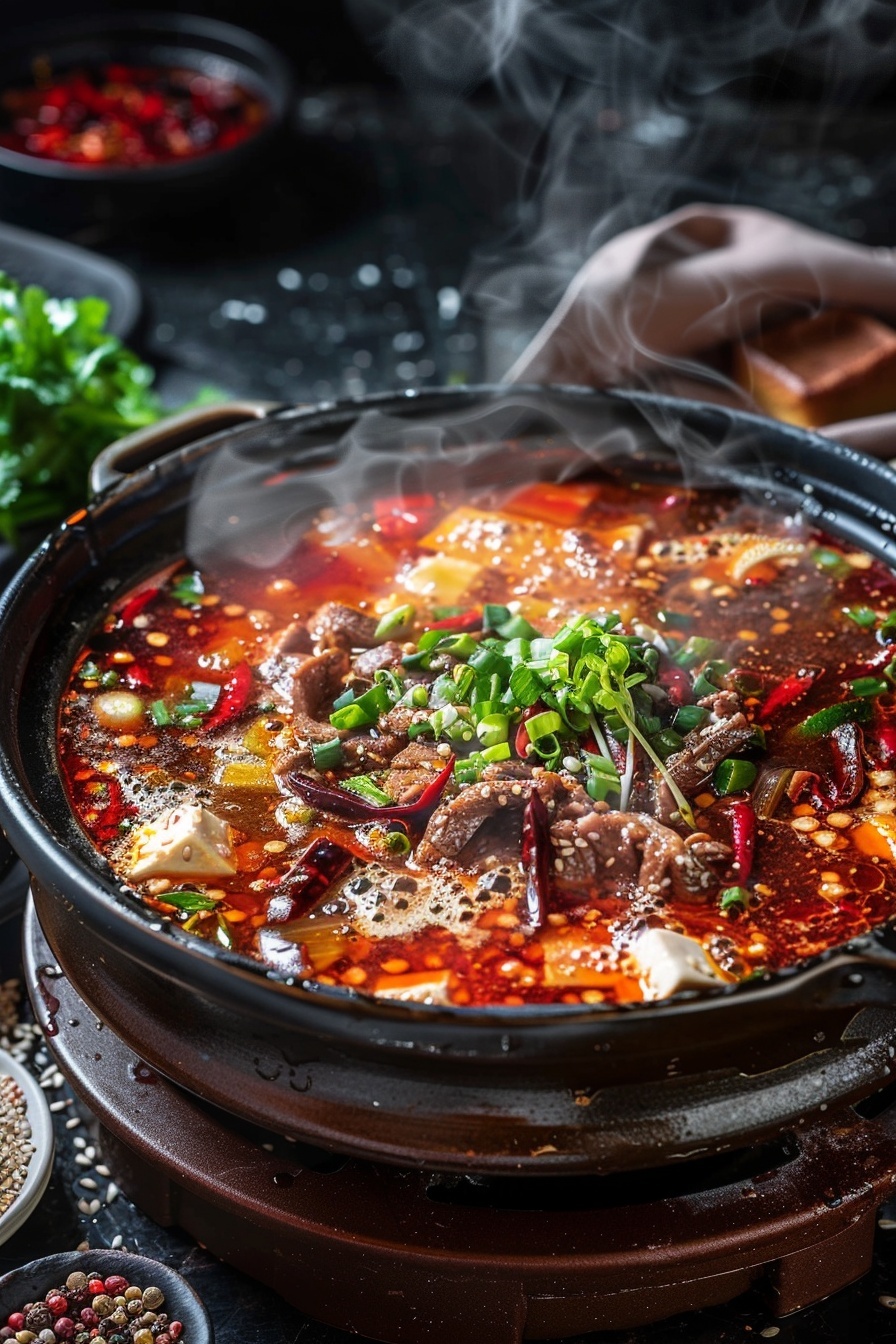
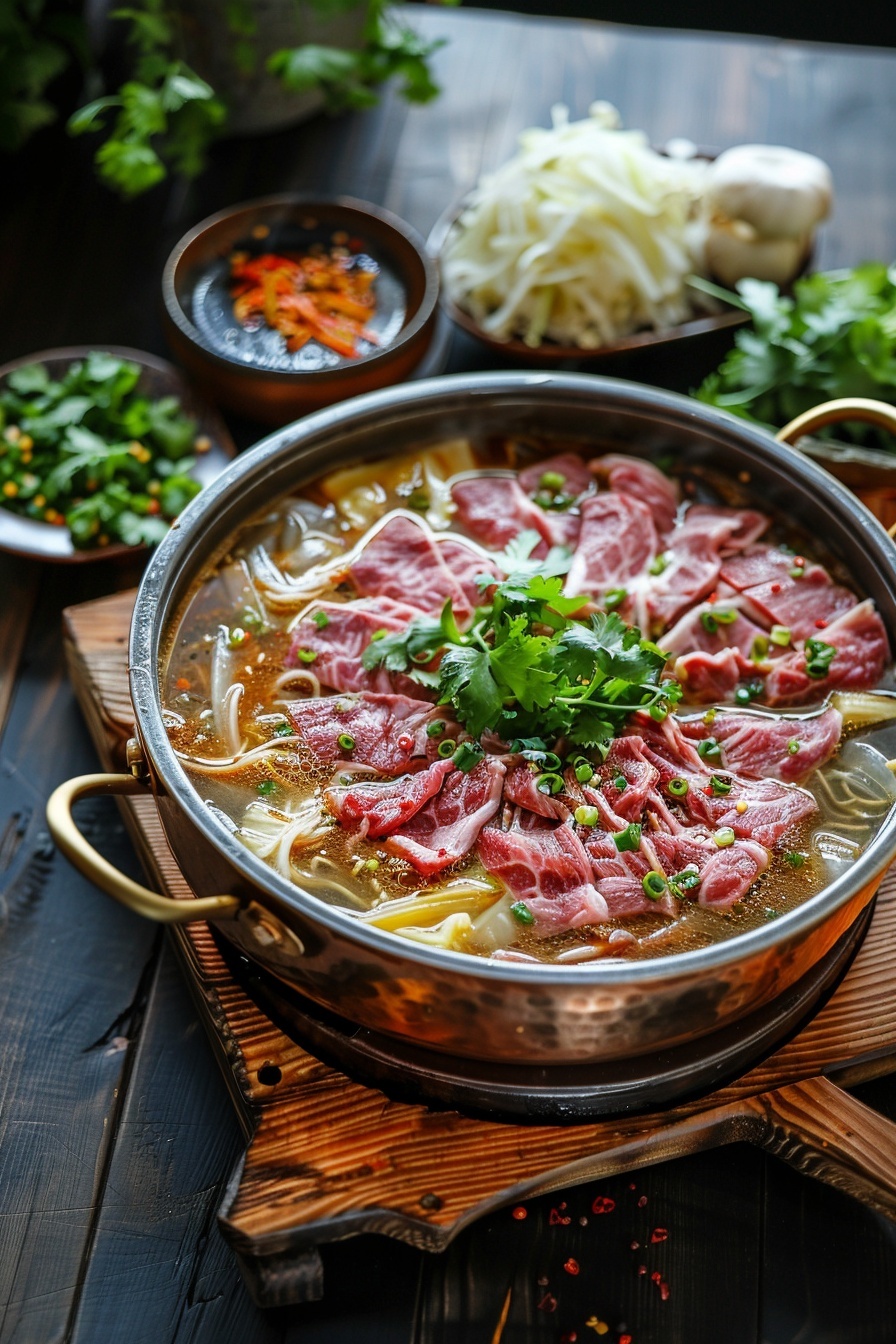
If you only ever make one hotpot recipe at home, let it be this one. Sichuan spicy hotpot — known in Chinese as Mala Hotpot (麻辣火锅) — is the most iconic and popular style of hotpot in the world. The word “mala” means numbing (麻) and spicy (辣), referring to the signature combination of Sichuan peppercorns and dried chilies that create a one-of-a-kind tingly, fiery sensation on your tongue. This is the best spicy hotpot broth recipe for those who love bold, complex flavors.

Spicy Broth Ingredients
- 4 tbsp doubanjiang (spicy fermented bean paste)
- 3 tbsp Sichuan peppercorns (whole)
- 15–20 dried Chinese chilies
- 6 cloves garlic, minced
- 1 thumb-sized piece of ginger, sliced
- 3 tbsp vegetable oil
- 2 tbsp soy sauce
- 1 tbsp dark soy sauce
- 1 tbsp sugar
- 6 cups chicken or beef broth
- 2 cups water
- 2 star anise
- 1 cinnamon stick
- 3 bay leaves
Best Ingredients to Cook in This Broth
- Thinly sliced beef ribeye or beef brisket
- Lamb shoulder, thinly sliced
- Pork belly slices
- Beef tripe and tendon (traditional)
- Firm tofu and tofu skin rolls
- Lotus root, thinly sliced
- Napa cabbage, king oyster mushrooms, enoki mushrooms
- Glass noodles (vermicelli)
- Frozen dumplings and fish balls
How to Make the Broth
- Heat oil in a wok or large saucepan over medium heat. Add doubanjiang and stir-fry for 2–3 minutes until the oil turns deep red and fragrant.
- Add ginger, garlic, Sichuan peppercorns, and dried chilies. Continue stir-frying for another 2 minutes.
- Add star anise, cinnamon, and bay leaves. Stir to combine.
- Pour in the broth and water. Add soy sauce, dark soy sauce, and sugar.
- Bring to a boil, reduce heat, and simmer for 20 minutes.
- Transfer to your hotpot pot at the table and keep at a steady simmer throughout the meal.
Pro Tip: To make this a yin-yang hotpot, pair this spicy broth with a mild chicken or mushroom broth on the other side of a divided pot. This way, guests with different spice tolerances can all enjoy the meal together.
Recipe 02 · Japanese
Japanese Shabu-Shabu
Delicate, healthy, and elegantly simple — the most refined hotpot style.
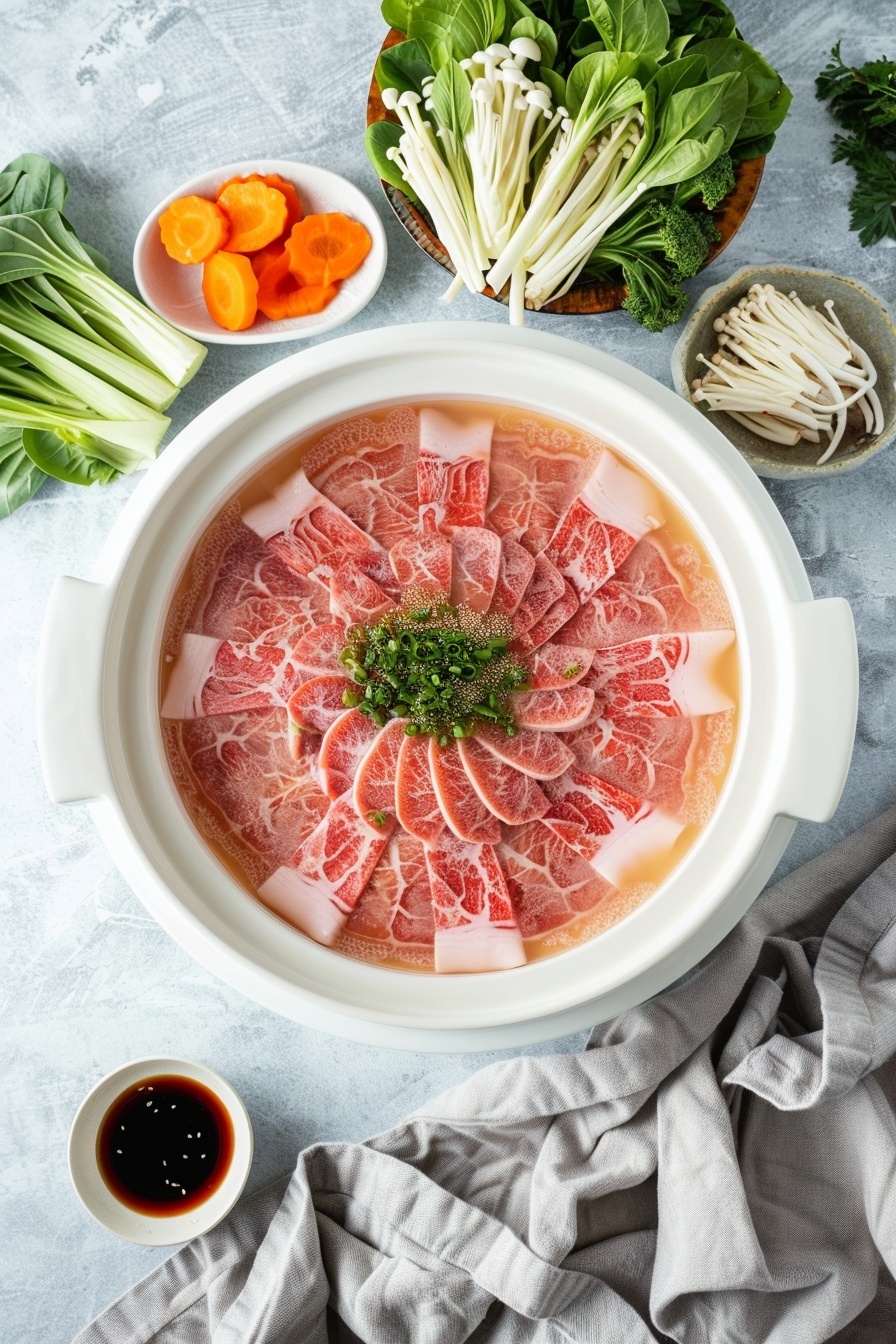
Shabu-Shabu is Japan’s answer to the communal hotpot experience, and it is widely considered one of the healthiest and most elegant hotpot recipes for beginners. The name comes from the Japanese onomatopoeia for the swishing sound that ultra-thin slices of beef make as they are dipped into the simmering kombu dashi broth. Unlike heavier Chinese-style hotpots, Shabu-Shabu uses an incredibly light, clean broth that lets the quality of the ingredients shine. It is one of the best Japanese dinner recipes for entertaining at home.
Kombu Dashi Broth Ingredients
- 8 cups cold water
- 2 large pieces kombu (dried kelp), about 20g total
- 1 tbsp sake
- 1 tsp salt
Best Ingredients for Shabu-Shabu
- Wagyu or high-quality ribeye beef, sliced paper-thin (ask your butcher)
- Pork loin, thinly sliced
- Napa cabbage, cut into 3-inch pieces
- Chrysanthemum greens (shungiku)
- Shiitake and enoki mushrooms
- Silken and firm tofu
- Udon noodles (add at the end — the “shime” finish)
- Thinly sliced Japanese fish cakes (kamaboko)
Essential Dipping Sauces
- Ponzu sauce — citrus-soy dipping sauce, light and refreshing
- Goma dare — creamy sesame sauce, rich and nutty
- Grated daikon radish and finely sliced scallions as garnish
How to Make It
- Soak kombu in cold water for 30 minutes (or overnight in the fridge for deeper flavor).
- Place the pot on the stove, bring to just below a simmer over medium-low heat. Remove kombu right before it boils.
- Add sake and salt. Transfer to the table burner and keep at a gentle simmer throughout.
- Guests pick up a slice of meat with chopsticks, swish it gently in the broth for 10–20 seconds, then dip in their chosen sauce.
- After all the meat and vegetables are eaten, add udon noodles to the now-flavorful broth for the final course.
Pro Tip: The key to great Shabu-Shabu is the quality of the beef. Invest in the best marbled beef you can afford — even a small amount of high-quality wagyu will elevate the entire meal dramatically.
Recipe 03 · Thai
Thai Coconut Curry Hotpot
Creamy, fragrant, and bursting with tropical Southeast Asian flavors.
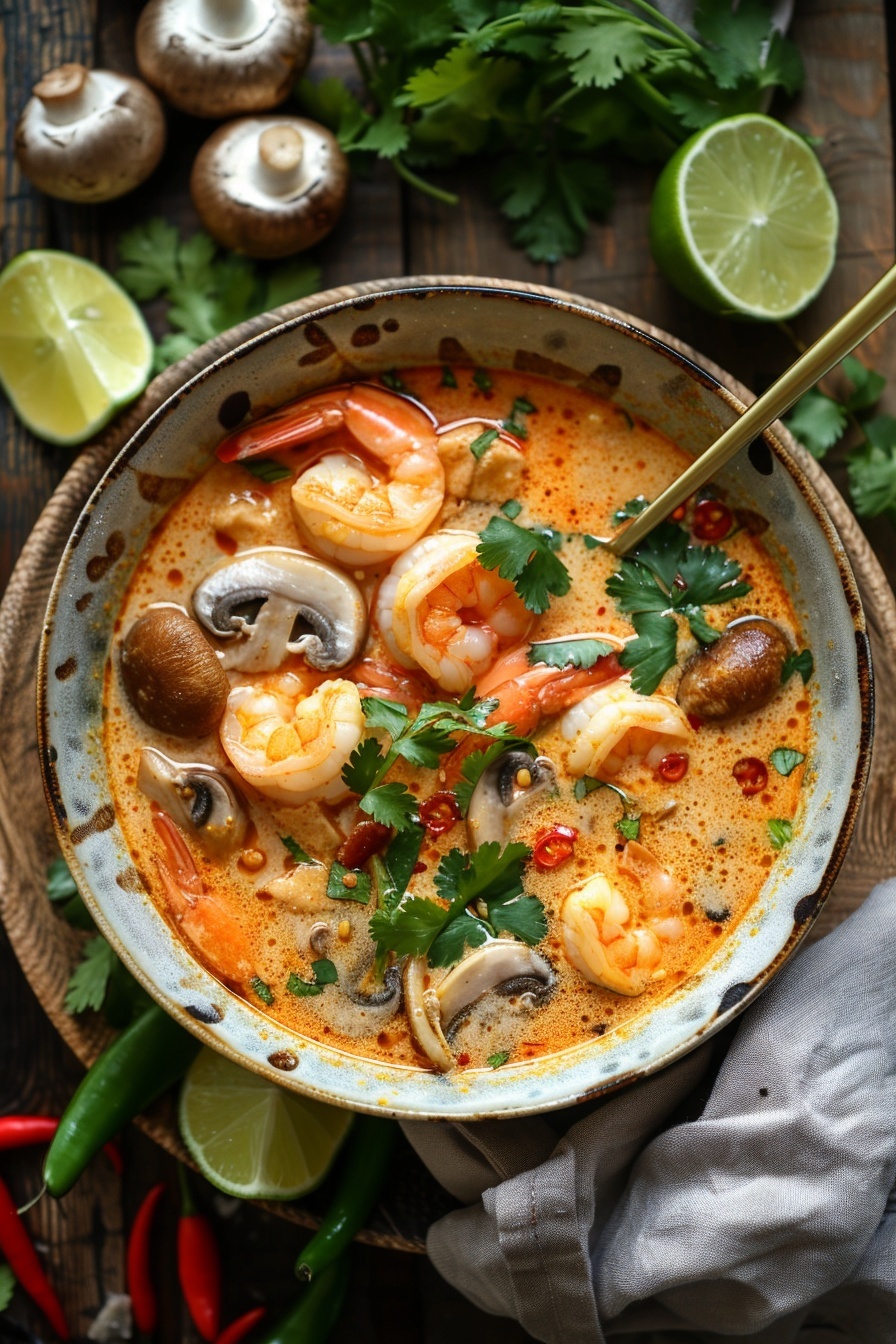
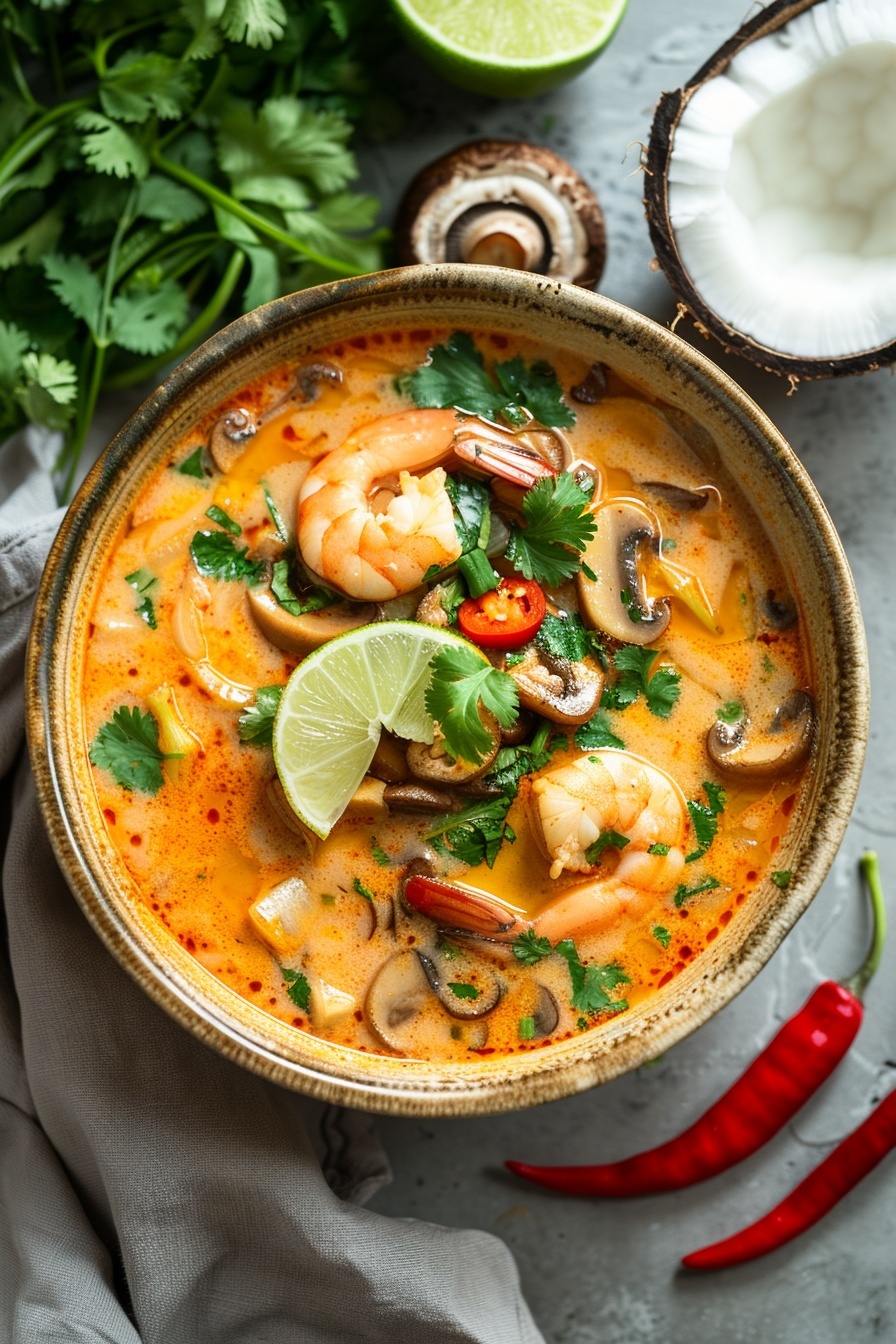
This stunning Thai coconut hotpot is one of the most aromatic and crowd-pleasing hotpot recipes for dinner parties. The broth is built on a base of rich coconut milk infused with lemongrass, galangal, kaffir lime leaves, and red curry paste — the same foundation as a classic Thai Tom Kha soup, but deeper and more complex. It works beautifully with both seafood and chicken, and the creamy, slightly spicy broth becomes even more delicious as more ingredients are cooked in it throughout the meal.
Coconut Curry Broth Ingredients
- 2 cans (800ml) full-fat coconut milk
- 3 cups chicken or vegetable broth
- 3 tbsp Thai red curry paste
- 2 stalks lemongrass, bruised and cut into 2-inch pieces
- 6 kaffir lime leaves, torn
- 1 thumb galangal (or ginger), sliced
- 3 tbsp fish sauce
- 1 tbsp palm sugar or brown sugar
- Juice of 1 lime
- 2 red Thai chilies, sliced
Best Ingredients for This Hotpot
- Tiger prawns and squid rings
- Chicken thigh, thinly sliced
- Mussels and clams
- Oyster and shiitake mushrooms
- Bok choy and baby spinach
- Rice noodles or glass noodles
- Fish tofu and shrimp balls
- Cherry tomatoes (they burst beautifully in the broth)
How to Make It
- In a large pot, heat 1 tbsp oil and fry the curry paste for 2 minutes until fragrant.
- Add coconut milk and broth. Bring to a gentle boil.
- Add lemongrass, kaffir lime leaves, galangal, and chilies. Simmer 10 minutes.
- Season with fish sauce, sugar, and lime juice. Taste and adjust.
- Transfer to the table and keep at a low simmer.
- Garnish with fresh cilantro and serve with steamed jasmine rice on the side.
Pro Tip: Coconut milk can curdle at high heat. Keep the broth at a gentle simmer throughout — never a rolling boil — to maintain that beautiful creamy consistency.
Recipe 04 · Korean
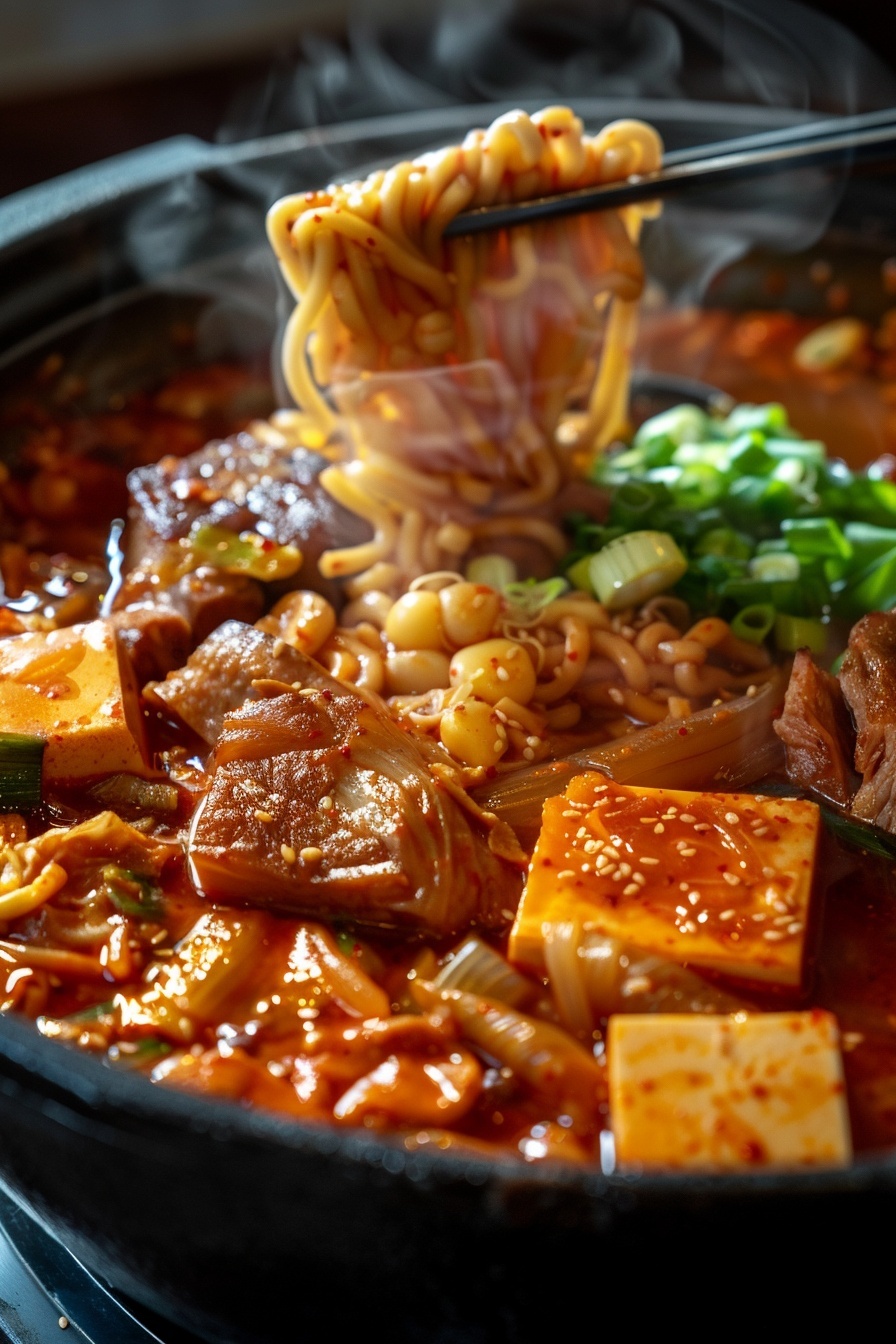
Korean Kimchi Hotpot (Kimchi Jjigae Style)
Deep, fermented, and boldly savory — Korea’s most beloved comfort in hotpot form.
This Korean kimchi hotpot takes the flavors of Korea’s most famous stew — Kimchi Jjigae — and transforms it into a full interactive hotpot dinner experience. The broth is built from well-fermented kimchi, gochugaru (Korean chili flakes), and a rich anchovy and kelp dashi base that gives it deep umami depth. This is one of the best Korean hotpot recipes for those who love bold, fermented, and complex flavors. The older your kimchi, the better this broth will taste.
Kimchi Broth Ingredients
- 2 cups well-fermented kimchi (aged 2+ weeks), roughly chopped
- 1/2 cup kimchi juice (from the jar)
- 1 tbsp gochugaru (Korean chili flakes)
- 1 tbsp gochujang (Korean chili paste)
- 4 cups anchovy and kelp dashi stock
- 2 cups water
- 200g pork belly, thinly sliced (for the base)
- 1 tbsp sesame oil
- 2 tbsp soy sauce
- 1 tsp sugar
- 4 cloves garlic, minced
Best Ingredients for This Hotpot
- Pork belly and pork shoulder, sliced
- Silken tofu (cut into thick cubes)
- Spam or canned ham (traditional Korean addition)
- Instant ramen noodles (add at the end)
- Perilla leaves and green onions
- Zucchini, sliced
- Enoki mushrooms and oyster mushrooms
- Rice cakes (tteok)
How to Make It
- In your hotpot vessel, heat sesame oil over medium heat. Add pork belly and fry until lightly browned.
- Add kimchi and gochugaru. Stir-fry with the pork for 3–4 minutes until everything is coated and sizzling.
- Add garlic, gochujang, soy sauce, and sugar. Stir to combine.
- Pour in the dashi stock, water, and kimchi juice. Bring to a boil.
- Simmer for 15 minutes to develop flavor. Transfer to table and let guests add their own ingredients.
Pro Tip: The secret to a great kimchi hotpot broth is using kimchi that has fermented for at least two weeks. Fresh kimchi will taste too raw. The more sour the kimchi, the richer and more complex the broth will be.
Recipe 05 · Vietnamese
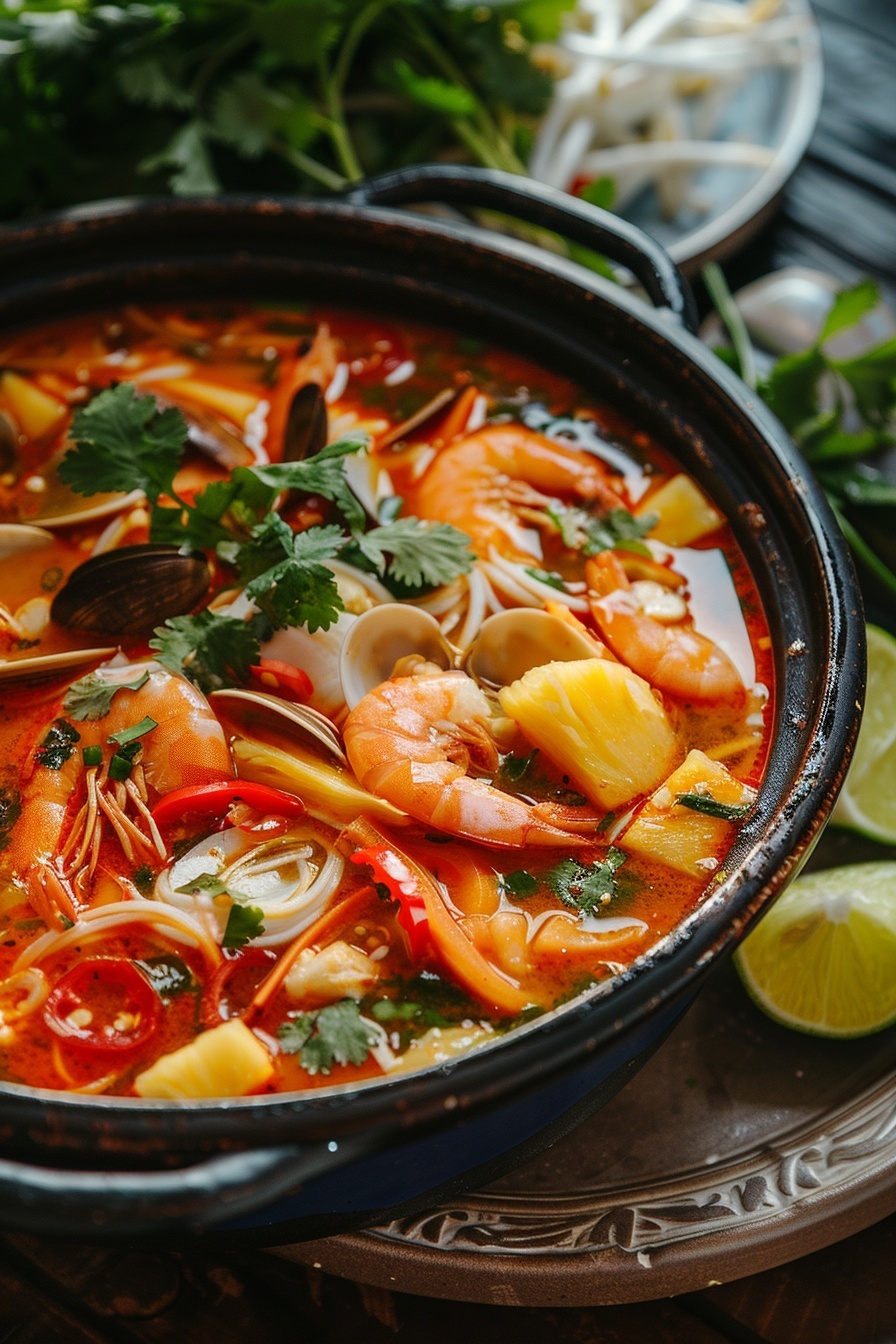
Vietnamese Spicy & Sour Seafood Hotpot (Lau Thai)
Bright, tangy, and loaded with the freshest seafood — Vietnam at its most vibrant.
Lau Thai is Vietnam’s most popular seafood hotpot recipe and it is an absolute explosion of flavor. Unlike the heavier broths in Chinese or Korean hotpot, this broth is intensely bright, sour, and herby — built on a foundation of tamarind, lemongrass, tomato, and pineapple that creates an irresistible sweet-sour-spicy combination. It is one of the best hotpot recipes for seafood lovers and the perfect choice for summer gatherings. The fresh herbs and lime squeezed over the cooked ingredients make every single bite feel alive.
Spicy Sour Broth Ingredients
- 6 cups seafood or chicken broth
- 2 tbsp tamarind paste
- 1/2 fresh pineapple, cut into chunks
- 3 ripe tomatoes, quartered
- 2 stalks lemongrass, bruised
- 3 tbsp fish sauce
- 1 tbsp sugar
- 3 red Thai chilies, sliced
- 4 kaffir lime leaves
- 1 tsp annatto oil or turmeric (for color)
Best Ingredients for Lau Thai
- Jumbo shrimp, peeled and deveined
- Squid, scored and cut into pieces
- Fresh clams and mussels
- Firm white fish fillets (tilapia, cod, or sea bass)
- Crab legs or whole crab, cracked
- Rice vermicelli noodles
- Banana blossom and water morning glory
- Fresh herbs: Vietnamese mint, cilantro, Thai basil, bean sprouts
How to Make It
- Bring broth to a boil in your hotpot pot. Add lemongrass and kaffir lime leaves, simmer 5 minutes.
- Add tamarind paste, fish sauce, sugar, and annatto oil. Stir to dissolve.
- Add pineapple chunks and tomatoes. Simmer 8 minutes — the tomatoes should soften into the broth.
- Add sliced chilies and taste — adjust sweet, sour, and salty balance.
- Transfer to the table. Serve with a large platter of fresh herbs, sliced lime, and chili sauce on the side.
Pro Tip: The fresh herb plate is not optional — it is essential to this dish. The contrast between the hot sour broth and cool fresh herbs is what makes Lau Thai so special. Pile the herbs high and refresh the plate often throughout the meal.
Recipe 06 · Japanese
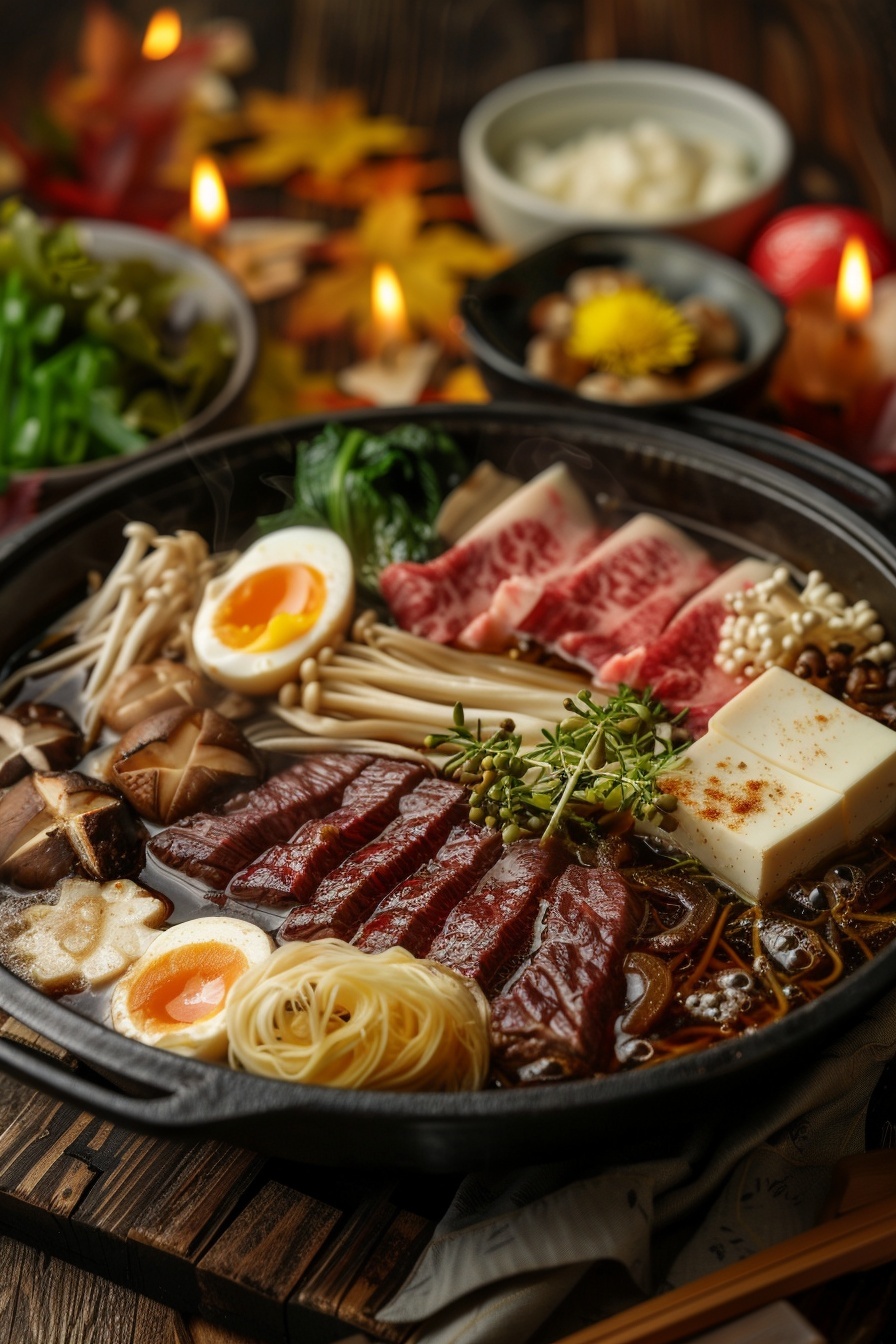
Japanese Sukiyaki
Sweet, savory, and deeply comforting — Japan’s most celebrated winter hotpot.
Sukiyaki is one of Japan’s most beloved and iconic hotpot recipes. Unlike the delicate Shabu-Shabu, Sukiyaki uses a rich, sweet-savory sauce called warishita — made from soy sauce, mirin, sake, and sugar — that braises the ingredients rather than simply poaching them. The signature finishing touch is dipping each freshly cooked piece into a bowl of raw beaten egg, which adds an incredible silky richness. This is the best Japanese hotpot recipe for winter and a true crowd-pleaser that everyone at the table will love.
Warishita Sauce (Sukiyaki Broth)
- 1/2 cup soy sauce
- 1/2 cup mirin
- 1/4 cup sake
- 3 tbsp sugar
- 1/2 cup dashi stock or water
Best Sukiyaki Ingredients
- Wagyu or ribeye beef, sliced paper-thin
- Firm tofu, cut into thick squares
- Shirataki (konjac) noodles
- Napa cabbage, roughly chopped
- Shiitake and enoki mushrooms
- Chrysanthemum greens (shungiku)
- Japanese long green onions (negi), cut diagonally
- Raw eggs, 1 per person (for dipping)
How to Make It
- Combine all warishita ingredients in a small saucepan and heat gently until sugar dissolves. Set aside.
- Heat your cast iron or sukiyaki pan on the table burner over medium heat. Add a small piece of beef fat or 1 tbsp oil.
- Add a few slices of beef and lightly brown on one side. Pour in half the warishita sauce.
- Add vegetables, tofu, and noodles around the beef. Let everything braise together in the sauce for 3–4 minutes.
- Each person beats a raw egg in their own bowl. Dip the cooked ingredients into the egg before eating.
- Add more warishita sauce and ingredients as the meal continues.
Pro Tip: The raw egg dip is not optional — it is the soul of Sukiyaki. The heat of the freshly cooked beef partially cooks the egg on contact, creating an extraordinarily silky, rich coating. Use the freshest eggs you can find, ideally pasteurized.
Recipe 07 · Chinese
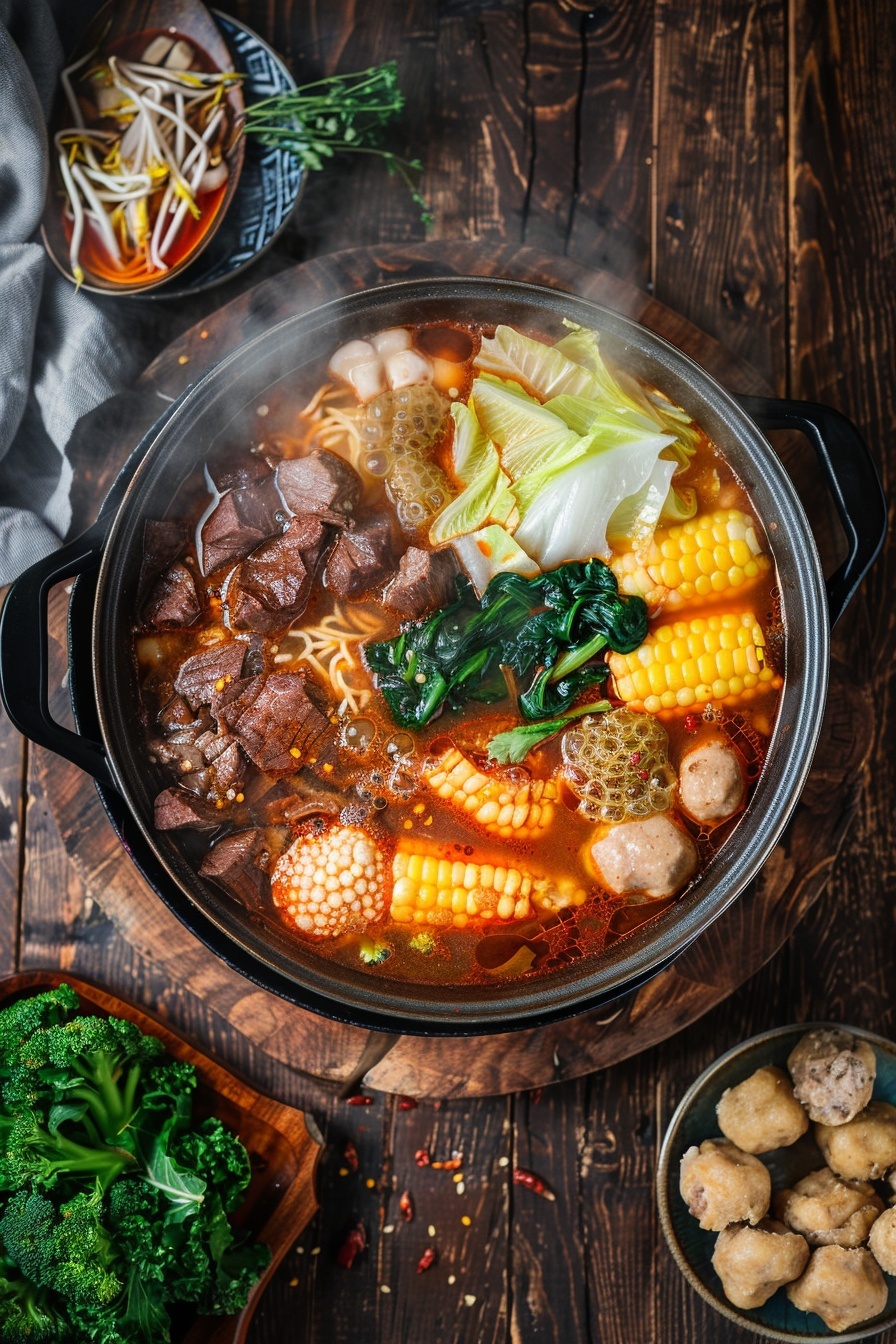
Taiwanese Tomato Beef Hotpot
A brilliant tangy broth that gets richer and deeper with every ingredient added.
The Taiwanese tomato beef hotpot is one of the most underrated and delicious hotpot recipe ideas you can make at home. The broth is built on slow-cooked tomatoes, beef bones, and aromatics — resulting in a tangy, deeply beefy, slightly sweet broth that is nothing short of extraordinary. As more ingredients are cooked in it throughout the meal, the broth deepens in flavor and complexity. It is a great mild hotpot option for those who prefer a flavorful but non-spicy experience.
Tomato Beef Broth Ingredients
- 6 large ripe tomatoes, roughly chopped
- 2 tbsp tomato paste
- 500g beef shank or beef bones (for richness)
- 1 large onion, quartered
- 5 cloves garlic
- 1 thumb ginger, sliced
- 2 tbsp soy sauce
- 1 tbsp sugar
- 6 cups water or beef broth
- 2 tbsp vegetable oil
- Salt and white pepper to taste
Best Ingredients for This Hotpot
- Beef ribeye or brisket, thinly sliced
- Beef meatballs
- Firm tofu and fried tofu puffs
- Cabbage, corn on the cob (cut into rounds)
- Enoki mushrooms and king oyster mushrooms
- Udon or rice noodles
- Frozen dumplings
How to Make It
- Heat oil in a large pot. Sauté onion and garlic until softened. Add tomato paste and stir-fry 2 minutes.
- Add fresh tomatoes and cook, stirring, until they begin to break down — about 8 minutes.
- Add beef bones, ginger, broth, soy sauce, and sugar. Bring to a boil.
- Reduce heat and simmer for 45–60 minutes, skimming the surface occasionally.
- Remove beef bones, season with salt and white pepper. Transfer to table and serve.
Pro Tip: Roast your tomatoes in the oven at 200°C for 20 minutes before adding them to the broth. This concentrates their sweetness and adds a subtle smoky depth that makes the broth taste like it’s been simmering for days.
Recipe 08 · Mongolian
Mongolian Lamb Hotpot
Bold, robust, and deeply warming — the original hotpot from the steppes of Mongolia.
The Mongolian lamb hotpot is widely regarded as one of the original hotpot recipes in history — some historians believe that Mongolian soldiers first cooked lamb in their helmets over open fires, which eventually evolved into what we now know as hotpot. This recipe uses a clean, subtly spiced lamb bone broth that perfectly complements the rich, slightly gamey flavor of the lamb. It is a deeply warming and satisfying winter hotpot recipe that will keep everyone at the table well into the night.
Lamb Broth Ingredients
- 1 kg lamb neck bones (for the broth base)
- 8 cups water
- 6 slices ginger
- 4 green onion stalks
- 2 tbsp Shaoxing rice wine
- 1 tsp white pepper
- 2 tsp salt
- 2 star anise
- 1 tsp cumin seeds (Mongolian staple spice)
Best Ingredients for Mongolian Hotpot
- Lamb leg or shoulder, sliced paper-thin
- Lamb liver and kidney (traditional, optional)
- Glass noodles (bean thread vermicelli)
- Napa cabbage and spinach
- Tofu skin rolls
- Sesame-soy dipping sauce with lots of cilantro
- Fermented tofu (nan ru) as a condiment
How to Make It
- Blanch lamb bones in boiling water for 5 minutes. Drain and rinse — this removes impurities for a clear broth.
- Place cleaned bones in a large pot with water, ginger, green onion, and Shaoxing wine. Bring to a boil.
- Add star anise, cumin seeds, white pepper, and salt. Reduce to a simmer.
- Simmer uncovered for 1.5–2 hours, skimming the surface regularly until the broth is clear and richly flavored.
- Strain the broth. Transfer to your hotpot vessel at the table.
Pro Tip: For this hotpot, the dipping sauce is paramount. Mix sesame paste, soy sauce, and fermented tofu with a generous amount of fresh cilantro, scallions, and chili oil. The sauce should be bold enough to stand up to the strong lamb flavor.
Recipe 09 · Asian Fusion
Seafood & Mushroom Hotpot with Miso Broth
Umami-rich, oceanic, and deeply nourishing — pure comfort in a pot.
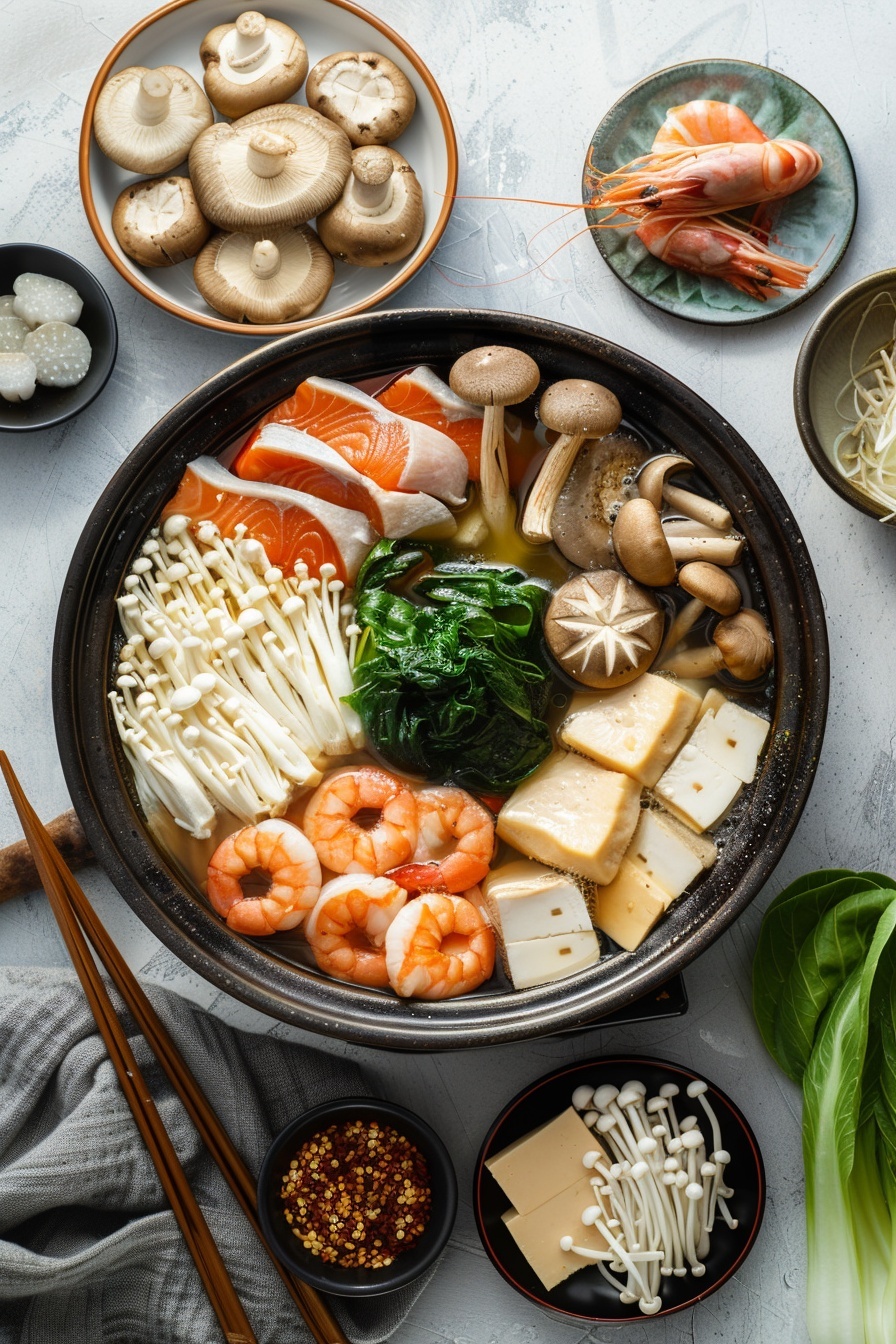
This seafood hotpot with miso broth is one of the most nutritious and flavorful easy hotpot recipes you can make at home with minimal effort. The miso and dashi broth is packed with natural umami, and it serves as the perfect neutral backdrop for the delicate flavors of fresh seafood and earthy mushrooms. It is an excellent healthy hotpot recipe that is naturally low in calories, high in protein, and absolutely delicious. This is also one of the best hotpot recipes for beginners since the broth is forgiving and quick to prepare.
Miso Seafood Broth Ingredients
- 6 cups dashi stock (kombu and katsuobushi)
- 3 tbsp white miso paste
- 1 tbsp soy sauce
- 1 tbsp mirin
- 1 tbsp sake
- 1 tsp sesame oil
- 2 cloves garlic, minced
- 1 tsp grated ginger
Best Ingredients for This Hotpot
- Fresh scallops, halved
- Large shrimp, peeled
- Salmon fillet, cut into 2-inch pieces
- Mussels and clams
- A mixed mushroom platter: shiitake, enoki, maitake, king oyster, oyster, and beech mushrooms
- Baby bok choy
- Silken tofu
- Udon noodles or soba noodles (for the finish)
How to Make It
- Heat dashi stock in your hotpot pot until steaming but not boiling.
- In a small bowl, whisk miso paste with a ladle of hot dashi until smooth. Pour back into the pot.
- Add soy sauce, mirin, sake, sesame oil, garlic, and ginger. Stir to combine.
- Keep at a gentle simmer — never boil miso broth as high heat destroys the probiotic compounds.
- Start with the mushrooms (they take longer), then add seafood as you go. Seafood cooks in 2–3 minutes.
Pro Tip: Create a beautiful mixed mushroom platter by arranging at least 5–6 different varieties. The variety of textures and flavors from different mushrooms is what makes this hotpot exceptional. As each variety cooks, it releases its unique umami into the broth — building layer after layer of depth.
Recipe 10 · Vegan / Vegetarian
Vegan Spicy Tofu & Vegetable Hotpot
Proof that plant-based hotpot can be just as bold, satisfying, and spectacular.
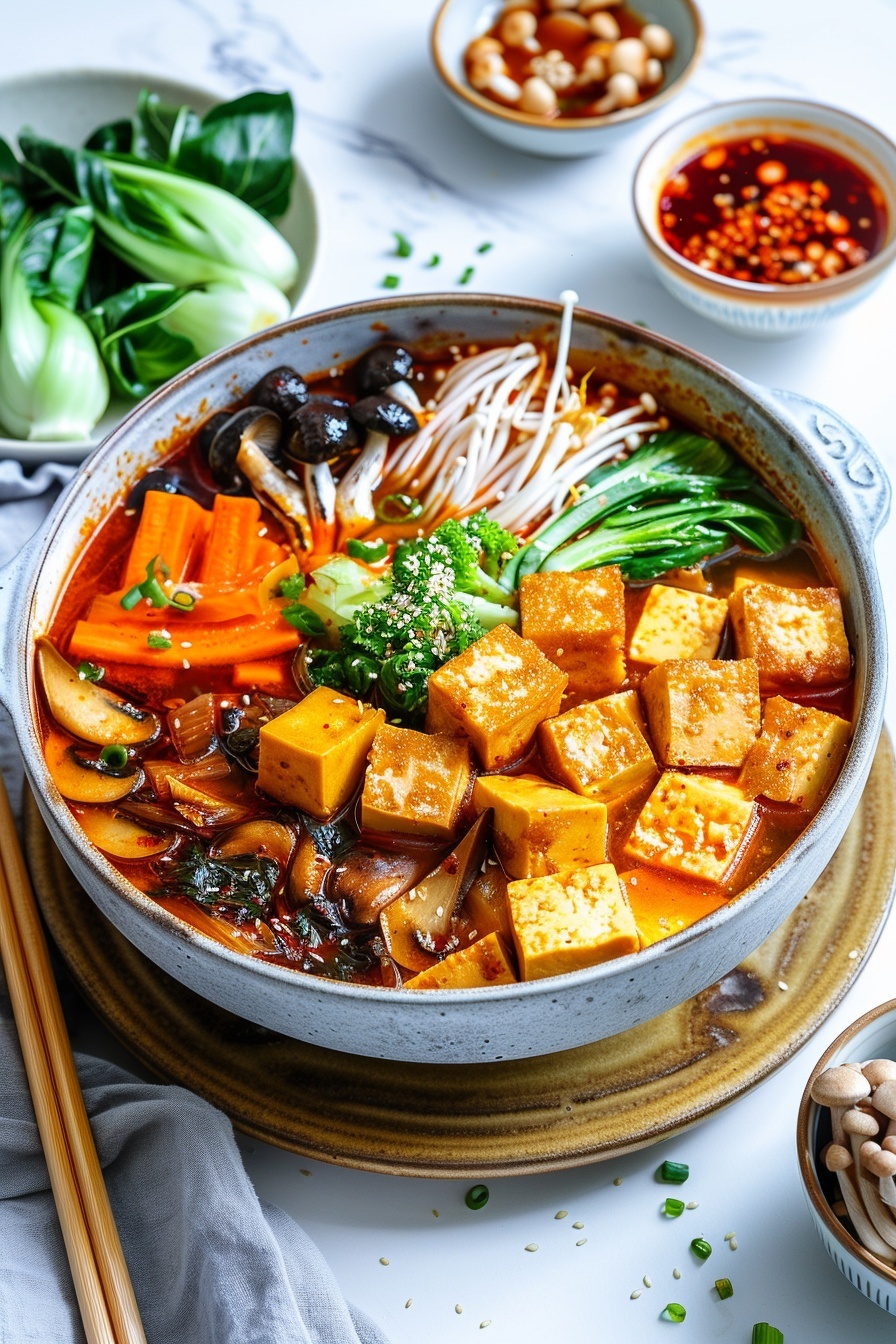
This vegan hotpot recipe is one of the most exciting and satisfying plant-based dinner ideas you’ll ever make. Don’t let the “vegan” label fool you — this hotpot broth is intensely flavorful, built on a deeply umami-rich kombu and shiitake mushroom dashi, spiked with Sichuan-inspired spices and a generous amount of chili bean paste. It is the perfect vegetarian hotpot recipe for beginners and is easily the most inclusive option if you are hosting a mixed group of meat-eaters and plant-based guests. Once you taste this broth, no one will miss the meat.
Vegan Spicy Broth Ingredients
- 6 cups kombu and dried shiitake mushroom stock
- 2 tbsp doubanjiang (spicy bean paste — ensure vegan)
- 1 tbsp gochujang
- 1 tbsp soy sauce or tamari
- 1 tbsp sesame oil
- 1 tsp Sichuan peppercorns, toasted and ground
- 4 cloves garlic, minced
- 1 thumb ginger, grated
- 1 tsp sugar
- 2 cups water
Best Vegan Ingredients for This Hotpot
- Silken tofu, firm tofu, and crispy fried tofu puffs
- All varieties of mushrooms: king oyster, shiitake, enoki, wood ear
- Lotus root, thinly sliced
- Broccoli, cauliflower, and baby corn
- Sweet potato and pumpkin, thinly sliced
- Konjac noodles (shirataki)
- Vegan dumplings and tofu skin rolls
- Baby bok choy and spinach
- Rice cakes (tteok) — naturally vegan
How to Make It
- Soak dried shiitake mushrooms and kombu in 8 cups of cold water overnight. Strain and reserve the liquid — this is your stock.
- Heat sesame oil in a pot. Add garlic and ginger, fry 1 minute. Add doubanjiang and gochujang, fry 2 minutes until dark and fragrant.
- Pour in the mushroom-kombu stock and water. Add ground Sichuan peppercorns, soy sauce, and sugar.
- Bring to a simmer and cook 10 minutes. Taste and adjust seasoning.
- Transfer to the table. Arrange all ingredients on platters and let everyone cook at their own pace.
Pro Tip: For an extraordinary vegan dipping sauce, blend together tahini, white miso paste, rice vinegar, soy sauce, garlic, and a touch of chili oil. This sauce is so good that meat-eating guests will want to use it too.
Frequently Asked Questions About Hotpot
What is the best hotpot broth for beginners?
If you are new to making hotpot at home, the best place to start is with a simple chicken broth-based hotpot or the Shabu-Shabu kombu dashi broth. Both are mild, quick to prepare, and pair well with almost any ingredient. As you get more comfortable, work your way up to the more complex Sichuan spicy broth or the kimchi broth.
What are the best meats for hotpot?
The best meats for hotpot are those that are sliced very thin (1–2mm) so they cook quickly in the hot broth. Ribeye beef, lamb shoulder, pork belly, and chicken thigh are the most popular choices. Ask your butcher to slice the meat thinly, or partially freeze the meat for 30 minutes before slicing it yourself at home for cleaner, thinner cuts.
How do I make hotpot broth from scratch?
All of the hotpot broth recipes in this guide are made from scratch. The key principles are: start with a quality stock base (chicken, beef, or dashi), build flavor with aromatics (ginger, garlic, green onion), and season with soy sauce, salt, and any region-specific spices. Simmer for at least 20–30 minutes before serving.
Can I make hotpot without a special pot?
Absolutely! Any wide, shallow pot placed on a portable induction cooktop or gas burner at the center of your table will work perfectly. A Dutch oven or even a deep nonstick pan can serve as a great hotpot pot for beginners. If you plan to make hotpot regularly, investing in a dedicated electric hotpot pot is worthwhile — they are affordable and designed to maintain a perfect simmering temperature throughout the meal.
What is the best hotpot sauce to make at home?
The most universally loved hotpot dipping sauce is a sesame-soy base: mix 3 tbsp sesame paste, 2 tbsp soy sauce, 1 tbsp chili oil, 1 tbsp rice vinegar, 1 tsp sesame oil, minced garlic, and a little warm water to thin it. Add fresh scallions and cilantro. This sauce works with every single hotpot recipe in this guide.
Final Thoughts: Which Hotpot Recipe Should You Try First?
All 10 of these hotpot recipe ideas are fantastic, but here’s a quick guide to help you choose based on your situation:
- First time making hotpot? Start with Japanese Shabu-Shabu — it’s the simplest and most forgiving.
- Hosting a spice-loving crowd? Go with the Classic Sichuan Spicy Hotpot — it never fails to impress.
- Looking for a healthy option? The Seafood and Mushroom Miso Hotpot is nutritious and incredibly delicious.
- Cooking for vegetarians? The Vegan Spicy Tofu Hotpot is a guaranteed crowd-pleaser.
- Want something sweet and savory? Japanese Sukiyaki is completely unique and deeply comforting.
- Craving bold Southeast Asian flavors? The Thai Coconut Curry Hotpot or Vietnamese Lau Thai will blow your mind.
No matter which recipe you choose, the most important ingredient in any hotpot meal is the people you share it with. Set the pot at the center of the table, pile the ingredients high, and let the meal unfold naturally. Hotpot is not just food — it is an experience.
Happy cooking — and enjoy every single bite! 🍲